

Just suppose that Christopher Marlowe was the real Shakespeare and he had to leave. He was banished forever from England, because someone had it out for him. And was going to kill him. And perhaps a group of people, including Queen Elizabeth, got together and planned his escape so he could carry on as the brilliant playwright he was in a foreign land, and meanwhile collect information on various plots and operations against England and communicate this information in his plays.
And suppose he handed off his plays in a convenient place to those involved in this network of spies. And these individuals took these plays, which were written as a rough draft, and embellished them with other information that would inform Queen Elizabeth and her council of pertinent information central to the decision making process.
Suppose this was documented in the historical record and there were those who wanted this historical record changed, people such as James Halliwell-Phillips and John Payne Collier. Perhaps these individuals were tasked with rewriting and/or reworking the historical record in favor of another candidate, namely William Shaksper, grain merchant from Stratford on Avon, as a stand in for the real Shakespeare.1
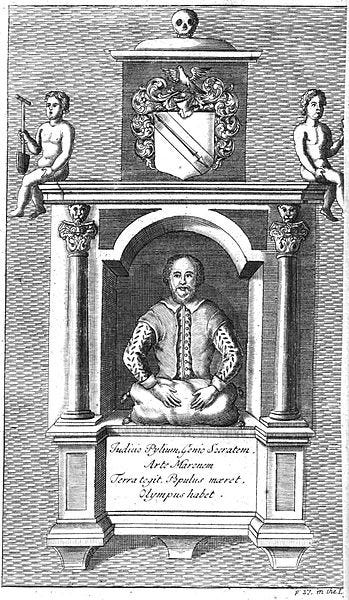
John Payne Collier and James Halliwell-Phillipps were friends. They had corresponded with each other 362 times over a 41 year time period.2 Payne Collier had the distinction of being an outright forger of manuscripts and correspondence between historical individuals, while Halliwell-Phillipps preferred to procure ancient, obscure and rare texts and cut and paste portions of these texts into his “scrapbooks.” The British Museum had in fact banned him from coming into their establishment for fear of what he might confiscate.3
It is curious that scholars have tried to explain away the forging and cut and paste actions of these individuals in the most convoluted of ways without “cutting” to the chase.
Collier had access to libraries and private collections. He could peruse editions of Shakespeare that no other scholar had laid eyes on. He knew where the gaps and ommissions, or perhaps even the unwanted editions, were in a pertinent setting. He knew about human psychology and how to spin a tale. He also knew there was very little in evidence in regards to the provenance of the works beyond what he said or alluded to. It was all so very tenuous. And so daring.
So Collier collated facts and data from historical sources in which fact and fiction were woven together in an ingenious fashion. He layered the forgeries and fabrications into a kind of rich tapestry that he hoped no one would unravel. He even invented a new character. And called this character, who clearly was an editor, “the Old Corrector” of the 1632 Folio.4 It all sounds very much like spy craft, with the lies, misdirection and fabrications.
And Halliwell? Well, he managed to find the daughter of the man who had amassed the largest manuscript collection of the 19th century and fall in love with her. This man, Sir Thomas Phillipps, would routinely outbid the British Museum on lot bids when they were trying to build up collections for their new library.5 Obviously the British Museum had its hands full with the likes of young cut and paste Halliwell-Phillipps and elder Phillipps the book hoarder.
James Halliwell-Phillips may haven stolen his father-in-law’s first edition of Shakespeare’s Hamlet, published in 1603.6 The bulk of his collection — the scrapbooks and papers, are now housed at the Folger Shakspeare Library.7
Notes:
Wikimedia Commons, Rowe Shakespeare monument, https://commons.wikimedia.org/wiki/File:Rowe_Shakespeare_monument_1709.jpg?uselang=en#Licensing.
Collier, John Payne, (1789-1883), Shakespearean scholar and forger, antiquary and journalist, https://discovery.nationalarchives.gov.uk/details/c/F51568.
Mareike Doleschal, “The Book World’s Jekyll and Hyde: James Orchard Halliwell-Phillipps,” Shakespeare Birthplace Trust, https://www.shakespeare.org.uk/explore-shakespeare/blogs/book-worlds-jekyll-and-hyde-james-orchard-halliwell-phillipps/.
Imogen Savage, ”What made a celebrated Victorian Shakespeare scholar commit professional suicide?,” October 26 2024, The Financial Times, https://www.ft.com/content/e472c354-5733-47d8-905c-cee3a299209d.
Eric Rasmussen, The Shakespeare Thefts, (New York: Palgrave Macmillan, 2011), 82.
Ibid., 85.
J.O. Halliwell-Phillipps, Folgerpedia, https://folgerpedia.folger.edu/J.O._Halliwell-Phillipps.